Blog - December 17, 2025
What Is ADHD? A Clear And Compassionate Guide For Children And Adults
Many people live for years feeling confused or frustrated by their difficulties with focus, restlessness, or impulsive decision-making. You may have been told to “try harder”, “be more organised”, or “just slow down”. Over time, these messages can quietly turn into self-doubt and exhaustion.
Attention Deficit Hyperactivity Disorder (ADHD) provides a different perspective: it’s about how the brain develops and functions, not about a lack of effort or ability. (National Health Service) [National Institute of Mental Health (NIMH)]
This article aims to gently explain what ADHD is, how it affects daily life, and how understanding it can open the door to meaningful support.
Understanding ADHD?
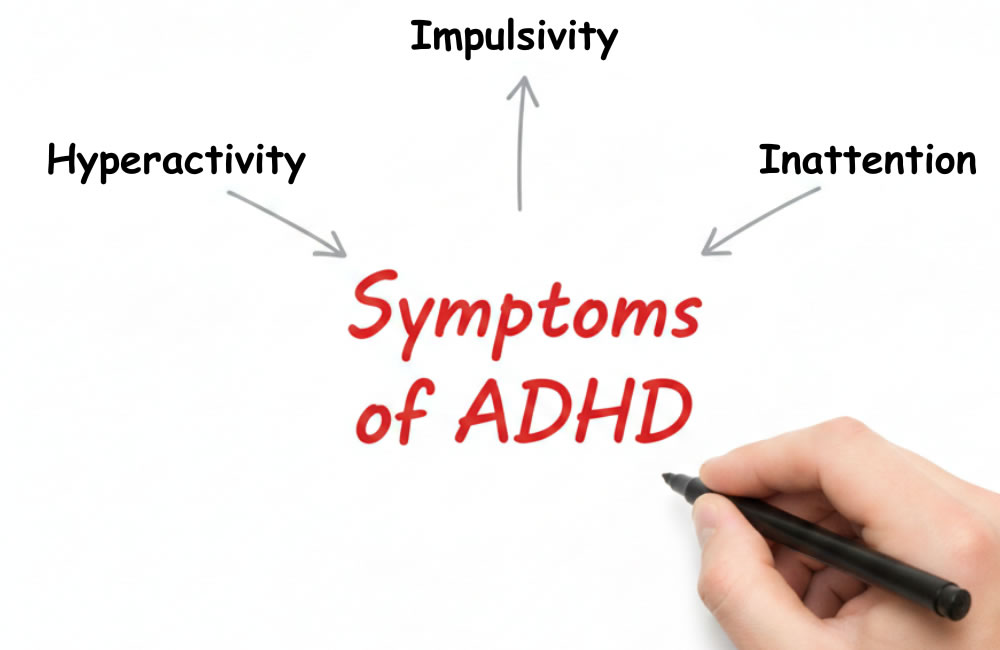
Attention Deficit Hyperactivity Disorder (ADHD) is a neurodevelopmental condition characterised by ongoing patterns of inattention, hyperactivity, and/or impulsivity that interfere with everyday functioning across home, school, work, and relationships. [National Institute of Mental Health (NIMH)]
What many people fail to understand is that ADHD is not caused by poor parenting, laziness, or lack of willpower. It reflects differences in how the brain regulates attention, motivation, emotional control, and executive functioning.
Although ADHD often begins in childhood, many individuals remain undiagnosed until adolescence or adulthood, particularly when symptoms are internalised or misunderstood. [Children and Adults with Attention Deficit Hyperactivity Disorder (CHADD)]
How ADHD Can Affect Everyday Life
ADHD looks different from person to person. For some, it is loud and visible. For others, it is quiet, internal, and exhausting. (National Health Service)
-
Inattention
You might notice:
- Difficulty sustaining focus, especially on routine or repetitive tasks
- Forgetting appointments, deadlines, or everyday items
- Struggling with organisation or time management
- Feeling mentally scattered or easily overwhelmed
- Starting tasks with good intentions, but finding it hard to complete them
In adults, inattention often shows up as chronic overwhelm rather than obvious distraction.
-
Hyperactivity
Hyperactivity is not always physical. It may include:
- Restlessness or a sense of inner agitation
- Fidgeting or constant movement
- Difficulty sitting still for long periods
- Feeling compelled to stay busy or mentally “on”
Many adults experience hyperactivity internally, through racing thoughts or difficulty switching off.
-
Impulsivity
Impulsivity can affect both decisions and relationships. Common experiences include:
- Acting or speaking before thinking things through
- Interrupting others unintentionally
- Difficulty waiting, slowing down, or tolerating frustration
- Making quick decisions that later feel confusing or regrettable
Why ADHD Is About How the Brain Works
Getting a clearer picture of ADHD often begins with a thorough assessment, which may includeADHD is closely linked to differences in executive functioning: the brain’s ability to regulate attention, behaviour, emotions, and motivation.
Some people find it helpful to think of ADHD as:
- Having too many tabs open at once
- An attention spotlight that is harder to direct
These differences are neurological. They are not character flaws.
How ADHD Can Look Different Across Life
ADHD may present differently across life stages.
- Children may appear restless, impulsive, or inattentive in structured environments such as school.
- Adults may experience ongoing difficulties with their organisation, emotional regulation, work performance, or relationships.
Many adults seek support later in life after years of coping without understanding why everyday tasks feel disproportionately difficult.
Recognising Strengths Alongside Challenges
While ADHD can bring real challenges, it is also commonly associated with meaningful strengths, including
- Creativity and original thinking
- Periods of intense focus (often called hyperfocus)
- High energy and enthusiasm
- Entrepreneurial thinking and problem-solving abilities
Understanding ADHD involves recognising both its difficulties and its potential.
Ways ADHD Can Be Supported
Getting a clearer picture of ADHD often begins with a thorough assessment, which may include
- A detailed clinical interview
- Exploration of developmental history
- Standardised questionnaires
- Sometimes, input from family members, schools, or workplaces.
[National Institute for Health and Care Excellence (NICE)]
For many people, receiving a diagnosis is not about labelling; it is about making sense of lifelong patterns and gaining access to appropriate support.
Support and Management Options
There is no single “right” way to manage ADHD. Support is most effective when it is individualised. [National Health Service (NHS)] [National Institute for Health and Care Excellence (NICE)]
-
Therapeutic and Psychological Support
- Cognitive Behavioural Therapy (CBT)
- ADHD-informed therapy or coaching
- Practical organisational strategies
-
Medication (When Appropriate)
- Stimulant and non-stimulant options, when clinically appropriate
-
Everyday Strategies That Can Help
- Sleep regulation and routine-building
- Breaking tasks into manageable steps
- Timers, reminders, and visual cues
- Adjustments at work or in education to reduce unnecessary strain
Why Psychoeducation and Support Matter
Understanding ADHD can reduce self-blame, improve relationships, and help individuals advocate for their needs. Support may include:
- Family psychoeducation
- ADHD peer support groups
- Mentoring or professional guidance
No one should have to navigate ADHD alone.
Start Your Support Journey with ZehnSaaz
If parts of this article resonated with you, it may be a sign that something in you is asking to be understood, not fixed, judged, or rushed.
At ZehnSaaz, we offer a calm, confidential space to explore ADHD and related experiences with care and depth. Whether you are seeking clarity for yourself, support for someone you care about, or reflective guidance in your professional work, you don’t have to navigate this alone.
You can take the next step by:
- Booking a confidential therapy session to explore your experiences in a supportive, non-judgemental setting.
- Exploring our retreats, designed to help you slow down, restore balance, and reconnect with yourself.
Understanding often begins quietly. Support begins when you choose to respond to it. Start your journey to understanding and support with ZehnSaaz.
References & Further Reading
The perspectives shared in this article are informed by established clinical guidance and widely recognised research in the field of ADHD. For further reading and trusted guidance, see:
- NICE Guidelines on ADHD (UK)
https://www.nice.org.uk/guidance/ng87 - NHS – ADHD Overview
https://www.nhs.uk/conditions/attention-deficit-hyperactivity-disorder-adhd/ - NHS – ADHD in Children & Young People https://www.nhs.uk/conditions/adhd-children-teenagers/
- National Institute of Mental Health (NIMH) – ADHD
https://www.nimh.nih.gov/health/topics/attention-deficit-hyperactivity-disorder-adhd - Centers for Disease Control and Prevention (CDC) – ADHD
https://www.cdc.gov/ncbddd/adhd/ - American Academy of Child & Adolescent Psychiatry (AACAP)
https://www.aacap.org - ADHD UK
https://www.adhduk.co.uk/ - CHADD (Children & Adults with ADHD)
https://chadd.org/ - ADHD ADULT UK
https://www.adhdadult.uk/what-is-adhd/